
Hey everyone! We’re two French students currently doing a work placement in Malaysia, near Kuala Lumpur. It’s the kind of placement where they tell you, “You’re going to the other side of the world for three weeks,” and you realize, on the plane, that you don’t even know how to say thank you in Malay.
We’re staying at Rim Global, a hotel in Petaling Jaya, and since we arrived, it feels more like we’ve landed on a different planet than in a different country. First shock: the heat. Not the “summer heat” of France, no, the “just get out of the shower heat” kind of heat. Second shock: it took us four days to figure out how the Touch ‘n Go card worked, and we found ourselves stuck at the bus turnstile once, with everyone behind us honking their horns (well, staring at us; here, you don’t honk at pedestrians, you save that for the road).
1. DETAILED ROUTE MAP
The “Merdeka Walk 3.0” loop is 4 km long and connects 10 heritage sites in Old Klang, between the north and south banks of the Klang River. Allow approximately 2.5 to 3 hours for a leisurely walk, including stops.
The direction of the walk follows the route indicated on the map: from Jambatan Kota, we walk along the river towards the fire station and Raja Abdullah’s warehouse, before crossing towards the train station, the royal gallery, then plunging into the multi-faith quarter (mosque, temple, Little India), ending with the church and the palace before returning to the bridge.
2. THE 10 STAGES OF THE CIRCUIT
Klang was the capital of Selangor from 1875 to 1880, before the seat of power was transferred to Kuala Lumpur and then Shah Alam. The town has retained its title of “Bandar DiRaja” (royal town) and concentrates, within a few hundred meters, more than thirty historical sites bequeathed by the tin trade, the British colonial period and the Sultanate of Selangor.
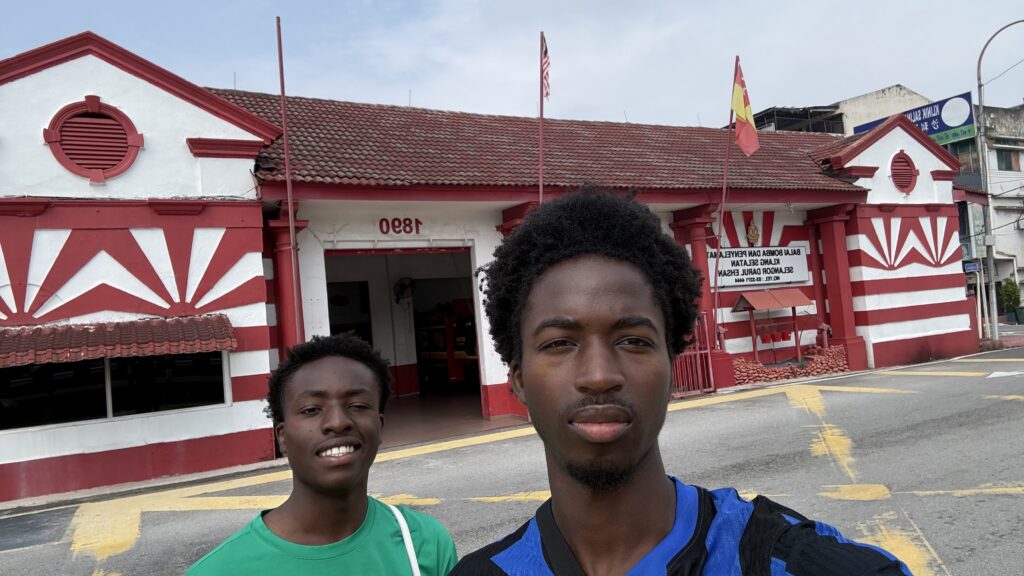
1 BALAI BOMBA KLANG — THE VICTORIAN FIRE STATION
COLONIAL HERITAGE
Built in 1890 by the British colonial administration at the intersection of Jalan Tengku Diauddin and Jalan Tengku Kelana, this red and white striped fire station is the oldest continuously operating fire station in Malaysia. It also houses the country’s only fire museum, featuring period equipment, a hand-cranked siren, and an old fire truck on display in front of the building.
Sights include the still-functional hand-cranked siren and the room where a century-old fire scar has never been repainted.
2 GEDUNG RAJA ABDULLAH — THE TIN WAREHOUSE
HERITAGE • HISTORY
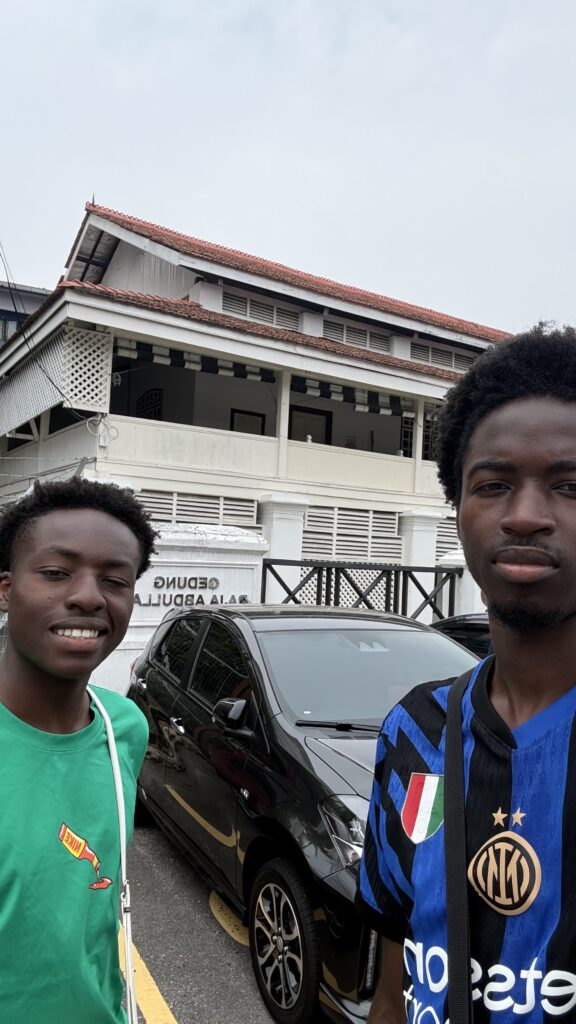
Built in 1857 by Raja Abdullah on the banks of the Klang River to store weapons, tin, and provisions, this Anglo-Indian style building has witnessed the city’s entire history: fortified headquarters during the Klang War (1867), colonial government offices in 1874 (where the very first meeting of the Selangor Council was held), police station until 1974, and now a tin museum. The old cells with their iron bars are still visible.
Expected feeling: a single building that encapsulates, in itself, the economic and political history of Selangor over 150 years.
3 STESEN KTM KLANG — THE RAILWAY STATION
HERITAGE • TRANSPORT
Built to replace Bukit Kuda station, which was too far from the city center, Klang station saw the passage of the line connecting Klang to its port from 1890 onwards. At the time, the port was booming thanks to the import and export of tin and rubber. Today served by the KTM Komuter Port Klang line, it also connects to the new LRT3 (Shah Alam Line) via a short pedestrian link.
4 GALERI DIRAJA SULTAN ABDUL AZIZ SHAH
HERITAGE • ROYALTY
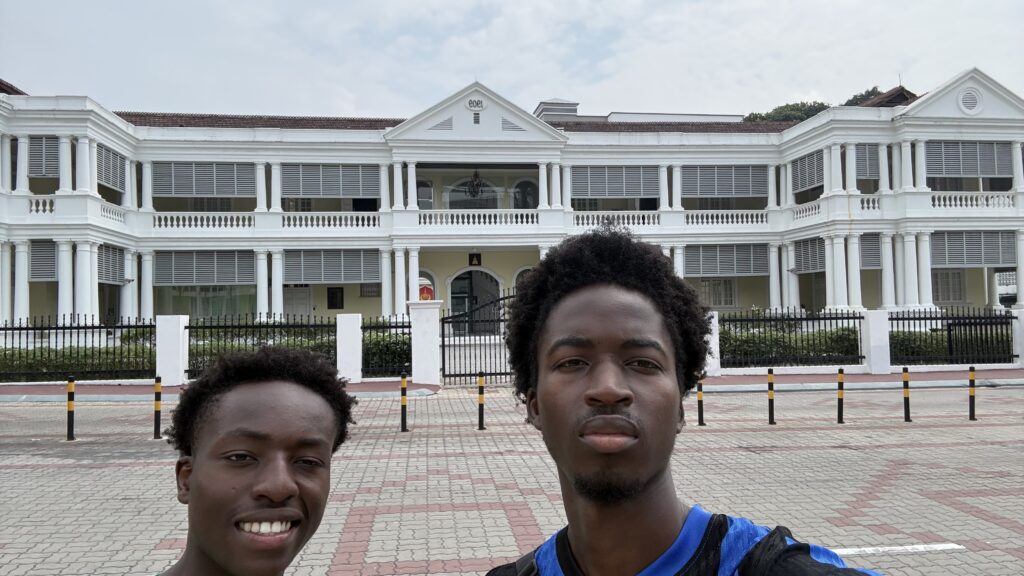
Housed in the Sultan Suleiman Building, constructed in 1909 by British architect Arthur B. Hubback, this royal gallery has served successively as a colonial land office, a Japanese headquarters during World War II, and then as a local administration building before its restoration. It is now dedicated to the memory of Sultan Salahuddin Abdul Aziz Shah, who reigned over Selangor for 39 years and was the 11th King of Malaysia (Yang di-Pertuan Agong). Just opposite, the “Laman Seni Safari” mural attracts photographers.
To see: the royal collections and the craft demonstrations sometimes held on site (Malay flower garlands, vadai, Chinese herbal tea).
5 MASJID INDIA KLANG — THE TENGKU KELANA MOSQUE
SPIRITUAL • CULTURE
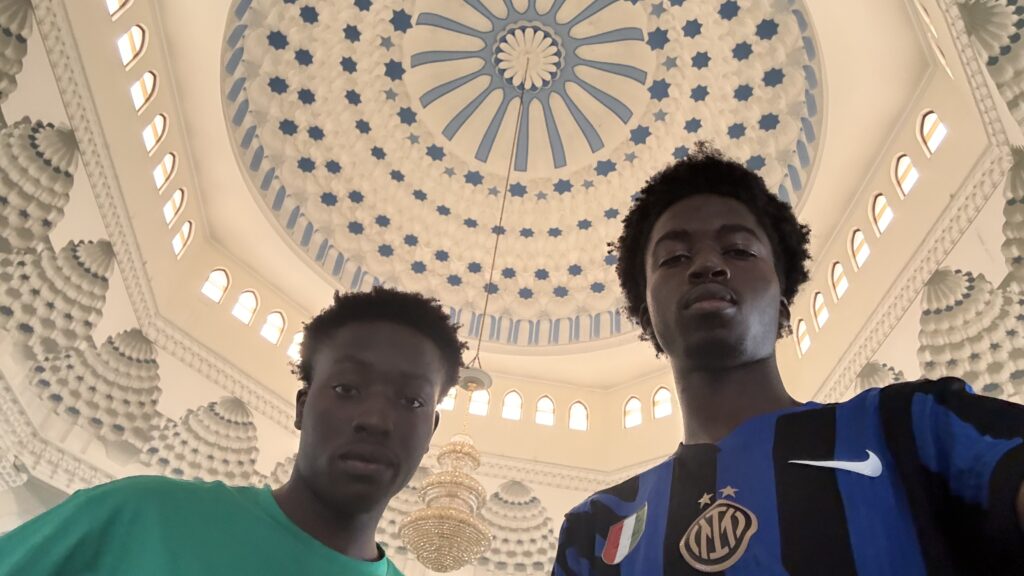
This place of worship for the Indian Muslim community of Klang originated as a prayer center built in 1890 by migrants from southern India, which was converted into a mosque in 1910. The current building, rebuilt in 1973 with two floors, is distinguished by its architecture inspired by Tamil mosques, quite different from classic Malay mosques.
6 KUIL SRI NAGARA THENDAYUTHAPANI — THE HINDU TEMPLE
SPIRITUAL • HERITAGE
The oldest and most magnificent Hindu temple in Klang, located at the corner of Jalan Dato Hamzah and Jalan Bukit Jawa. Managed by the Nattukkottai Chettiar community, it served as a place of worship for the first Indian laborers who came to trade in tin and rubber. Its richly carved entrance tower (gopuram) makes it one of the neighborhood’s landmarks.
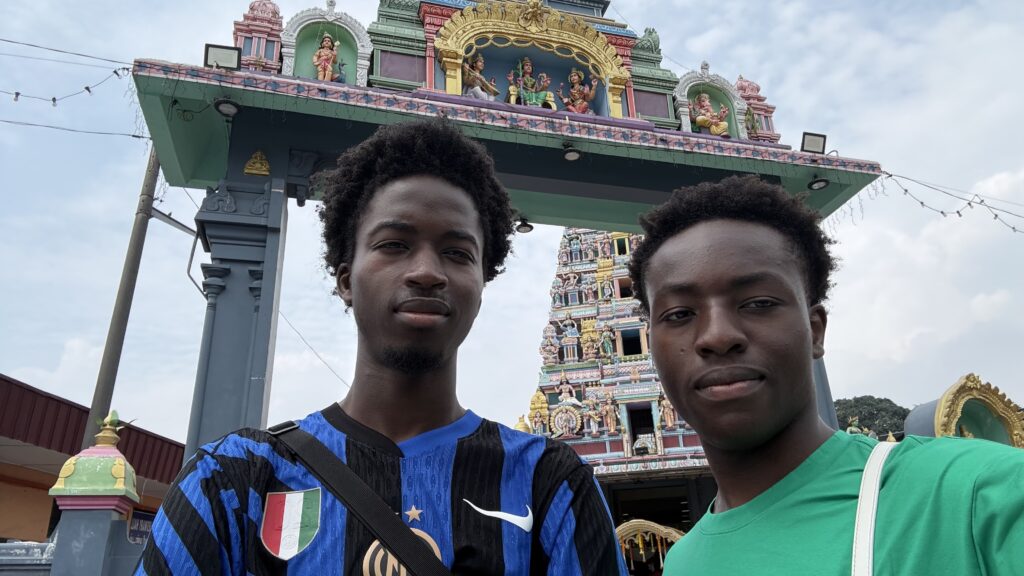
7 LITTLE INDIA — JALAN TENGKU KELANA
CULTURE • SHOPPING • GASTRONOMY
Formerly known as Jalan Rembau and later renamed in honor of the seventh Sultan of Selangor, this street was shaped successively by Malay, Chinese, and then Indian merchants, who gave it its nickname, “Little India.” Today, for several hundred meters, you’ll find saris, spices, gold jewelry, florists, and Indian food stalls alongside a few centuries-old Chinese kopitiams.
Expected experience: the street’s eclectic mix of sounds and smells—music, spices, fried food—which changes rhythm every fifty meters.
8 GEREJA OUR LADY OF LOURDES — THE CHURCH OF OUR LADY OF LOURDES
SPIRITUAL • HERITAGE
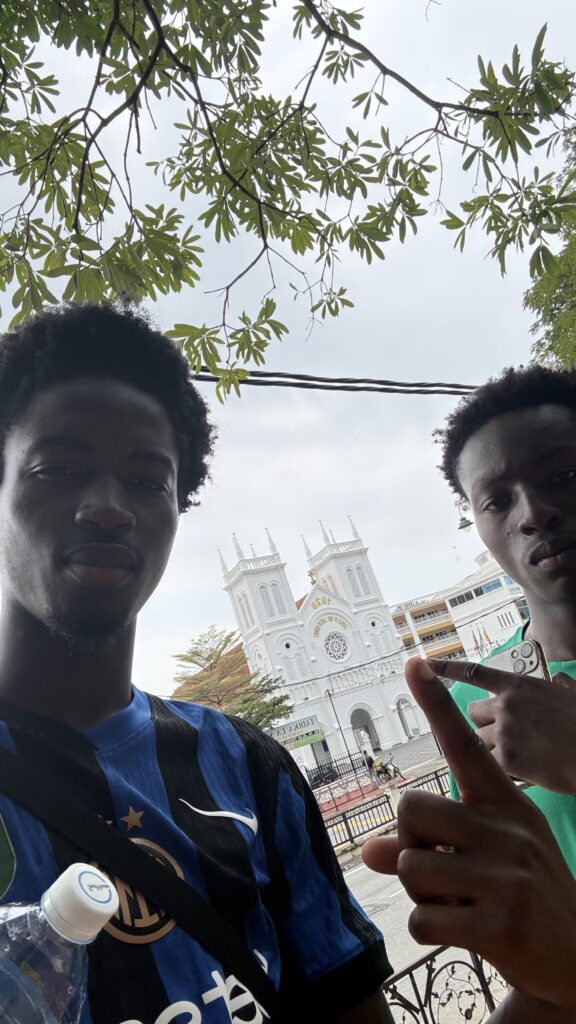
The oldest church in Klang, built in 1928 in a Gothic style inspired by the Sanctuary of Lourdes in France, features stained-glass windows and soaring spires. Originally a simple wooden house dating back to 1918, it became a place of prayer for tin miners, Tamil planters, and dockworkers. A grotto with a statue of the Virgin Mary at the rear remains open to visitors even when the church is closed.
9 ISTANA ALAM SHAH — THE ROYAL PALACE
ROYALTY • HERITAGE
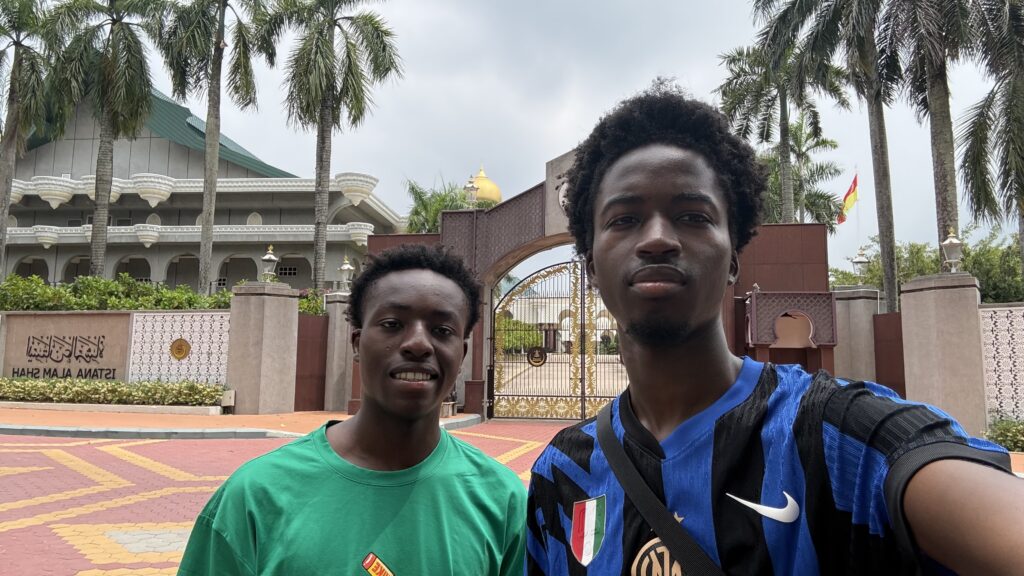
The official residence of the Sultan of Selangor, this palace with its golden domes can only be viewed from the outside, from the street, with its manicured gardens. It is located less than a kilometer from Jalan Tengku Kelana, which is part of the “royal protocol route” used during coronations and official ceremonies.
10JAMBATAN KOTA — RETURN TO STARTING POINT
HERITAGE • ICONIC
Malaysia’s first double-deck bridge, built between 1958 and 1960 by the British company Dorman Long (also responsible for the Sydney Harbour Bridge), Jambatan Kota was inaugurated in 1961 by Sultan Salahuddin Abdul Aziz Shah. The lower deck, reserved for pedestrians, cyclists, and motorcyclists, remains open; the upper deck, closed to traffic since the 1990s, has become a public square (Dataran Jambatan Kota), now a popular spot for watching the sunset over the Klang River.
3. Durian Experience
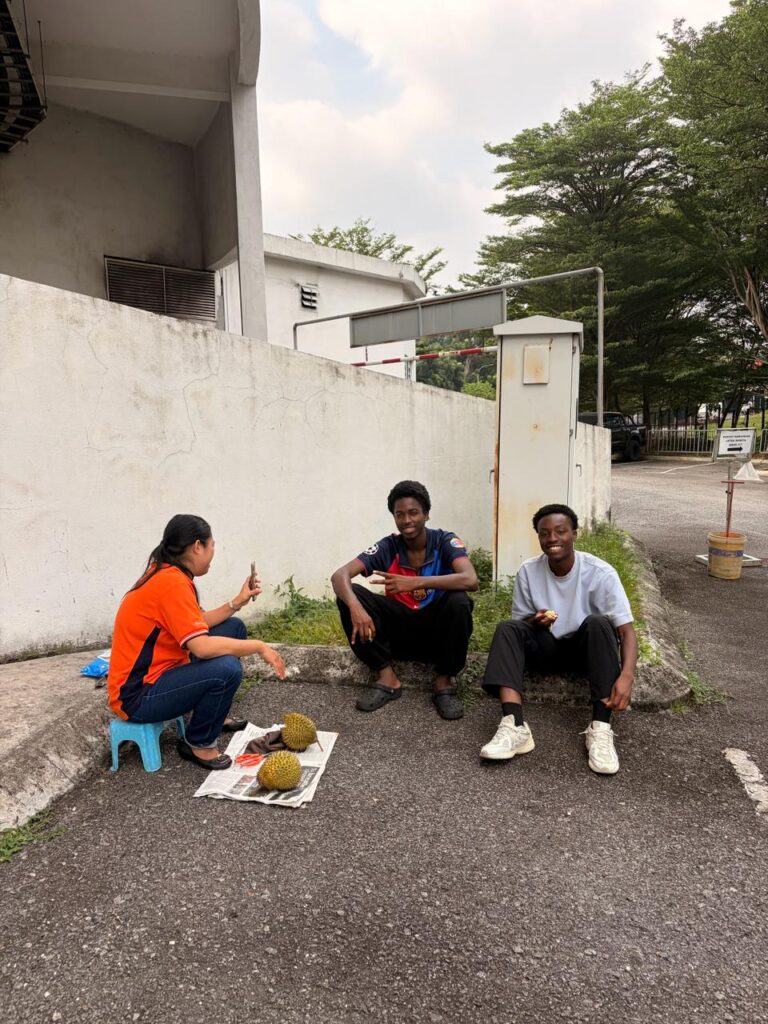
We finally tried durian! This fruit is known for its very strong smell—even in Langkawi, it was omnipresent in some places—but until now, we had never dared to try it. It was thanks to JC, our internship supervisor, that we were finally able to taste it.
The result was surprising: a powerful, almost unsettling smell, for a fruit that was presented to us as the number one fruit in Malaysia. Personally, I wasn’t really taken with it—a creamy taste, a bit like onion, was definitely not what I was expecting. My colleague, on the other hand, enjoyed it a bit more, though it wouldn’t rank among his favorite fruits in the country.
That said, we don’t regret the experience at all! We tasted the original, the “pure” durian, so why not try other varieties to get a more complete picture?